Workday has become a valuable enterprise platform for organizations seeking to improve human resource management, workforce planning, and business operations. As more companies adopt cloud-based applications, demand continues for professionals who understand Workday functionality, reporting, integrations, and system administration. Enrolling in Workday HCM Online Training can help learners develop essential platform knowledge and prepare for different career opportunities in this growing field.
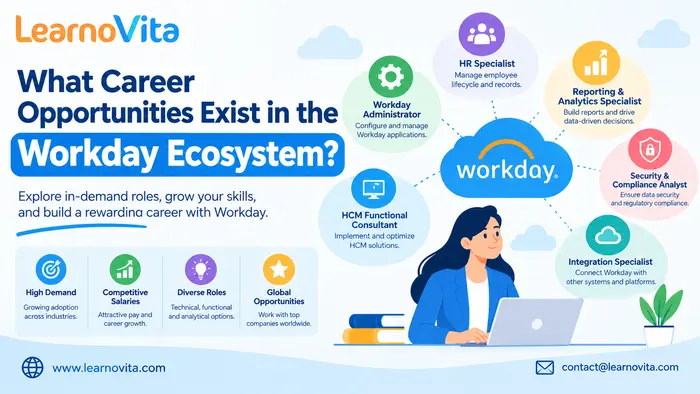
Exploring the Workday Ecosystem
The Workday ecosystem supports various business activities, including employee information management, recruitment, talent development, workforce planning, and organizational reporting. It enables companies to automate processes, maintain consistent records, and improve operational efficiency. Workday professionals help configure applications, support users, manage data, and ensure that system functions align with business objectives. Understanding these areas gives learners a clearer picture of the different specializations available within the Workday environment.
Workday HCM Functional Consultant Opportunities
Workday HCM Functional Consultants assist organizations in configuring HR processes according to their requirements. Their work may involve employee lifecycle management, organizational structures, business process configuration, and security settings. They collaborate with HR teams, gather requirements, test configurations, and help resolve functional challenges. Individuals interested in HR operations and enterprise software can explore Workday Training in Bangalore to build their understanding of HCM concepts and functional consulting responsibilities.
Workday Integration and Technical Consultant Roles
Technical consultants specialize in connecting Workday with other applications used across an organization. They may use tools such as Enterprise Interface Builder (EIB), Workday Studio, Core Connectors, and web services to facilitate data exchange. Responsibilities can include configuring integrations, monitoring data transfers, investigating errors, and conducting integration testing. This career path is suitable for people who enjoy technical challenges and system connectivity. Developing knowledge of integration tools and data handling can support progression toward specialized technical roles.
Career Options in Workday Reporting and Analytics
Workday Reporting Analysts transform system information into reports that support business decisions. They may create custom reports, configure report fields, develop calculated fields, verify data accuracy, and maintain recurring reporting processes. HR teams and managers use these reports to review workforce information and monitor business activities. Professionals who enjoy working with data, identifying patterns, and presenting accurate information can build valuable expertise in Workday reporting and analytics.

Workday System Administration and Support
System administrators and application support analysts help maintain the reliability of Workday applications. Their responsibilities may include resolving user queries, troubleshooting errors, managing access permissions, supporting system changes, and documenting solutions. They also coordinate with other technical and functional teams when issues require additional investigation. Learners interested in application maintenance and technical support can explore Workday Training in Chennai to strengthen their understanding of system operations and practical Workday applications.
Workday Business Analysis and Implementation Careers
Workday Business Analysts help organizations translate business needs into system requirements. They gather stakeholder feedback, document workflows, analyze process gaps, and support testing. Implementation Consultants may contribute to configuration, data migration, deployment preparation, user acceptance testing, and post-launch assistance. These roles require strong communication, analytical thinking, documentation, and teamwork. Professionals who understand business operations and Workday capabilities can contribute to implementation projects and help organizations introduce effective technology solutions.
Developing Skills for Workday Career Advancement
Long-term career growth in Workday depends on practical experience, technical knowledge, and continuous professional development. Learners can focus on functional configuration, reporting, integrations, application support, or implementation based on their interests. As professionals gain experience, they may progress into senior consulting, specialized technical positions, project coordination, or solution-focused roles. Exploring Workday Training in Hyderabad can help learners build relevant skills and prepare for opportunities aligned with their career ambitions.
Conclusion:
The Workday ecosystem offers diverse professional opportunities across HR technology, functional consulting, technical integration, reporting, application support, and business analysis. Each role contributes to helping organizations manage information, streamline workflows, and use enterprise applications effectively. By building a strong foundation, gaining practical experience, and continuously improving their skills, learners can prepare for suitable Workday positions and work toward long-term professional development.
Comments