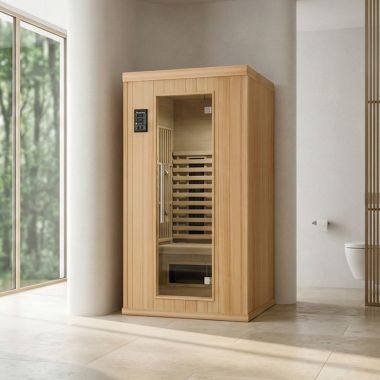
When two cabins look similar on a screen, the difference between them shows up in the timber, the joints and the heater, and those details decide whether a sauna still feels good after five years. Comparing materials is not a technical exercise for its own sake; it is the quickest way to understand what a build is actually made of.
One-person cabins are a good place to learn this. There are fewer components, less timber and a simpler assembly, so the quality of what is there is easier to see and the consequences of poor choices are quicker to notice. The same principles then apply to every larger model on the market.
This guide sets out what to look for in a compact cabin, from the species of wood and the thickness of the panels through to the heater, the insulation and the warranty. Health Mate UK has been manufacturing infrared saunas since 1979 and has supplied compact cabins to homes across the country.
Assessing the Materials in an Infrared Sauna 1 Person UK Cabin
Timber species is the first decision that matters. Cedar is prized for warmth to the touch and for its resistance to damp, while aspen is lighter, softer and gentler on the skin, and spruce is the sturdy budget option that works perfectly well with a good protective treatment. An Infrared Sauna 1 Person UK cabin built from any of them can last for years, provided the interior stays dry.
Panel thickness and construction tell you more than the species alone. Thick tongue-and-groove boards, a tight fit between panels and a properly framed corner are what make a cabin rigid enough to sit in without feeling flexy. When you can, open a display unit and look at the joints, because a smooth joinery tells you a great deal about how the rest was built.
Check the interior finish as well as the outside. A sealed or oiled surface that resists sweat and can be wiped down is easier to live with than bare untreated boards, and the treatment matters more in a small cabin where the air is close and the heat is intense. A light, even coating is preferable to a thick one that feels tacky.
The heater is the heart of the cabin and the part worth spending time on. Look for a clear rating, a warranty that covers the elements rather than just the casing, and a control that offers a sensible range of temperatures and a timed start. An Infrared Sauna 1 Person UK cabin with a well-specified heater will be used far more often than one saved for special occasions.
Joinery, Insulation and the Hidden Details
What Good Joinery Looks Like
Good joinery is visible before anything is switched on. The panels meet squarely, the bench is level, the door closes squarely and the fastenings sit flush. Where a cabin is flat-packed, the instructions and the labelled fixings matter just as much as the timber, since a well-guided assembly turns good components into a rigid structure.
Wood movement is worth asking about too, because timber expands and contracts with heat and moisture. A cabin built with that in mind uses battens and gaps that allow the boards to move, rather than fixing them so tightly that they buckle. Manufacturers who understand this point tend to be the ones whose cabins still open properly in their third winter.
Insulation and the Shell
Insulation determines how quickly a cabin reaches temperature and how much it costs to hold it, so the type and thickness of the material behind the panels is worth understanding. A well-insulated shell also feels better to sit in, because the heat stays where it belongs rather than escaping through the walls into the room.
Judging Build Quality in a 1 Person Sauna UK Model
Weight is a surprisingly good proxy for build quality in a compact cabin. A well-made cabin uses dense timber, a substantial frame and a proper heater, and it can be noticeably heavier than a thin alternative of the same size. Where you can, compare the packed weight of two models, because the difference usually reflects the difference in the materials going into them.
Finish and fittings deserve the same attention. Door handles that do not become hot, bench edges that are properly rounded, a towel hook that will not tear, and controls that can be reached from a seated position all matter more in a small cabin than they do in a large one, because everything is closer and more noticeable.
A 1 Person Sauna UK cabin built with care usually comes with documentation that says something about the company behind it. Clear instructions, a parts list, a warranty that names the elements and a telephone number that is answered are all small signals, but they are the signals that decide how the experience feels when something needs explaining.
None of this requires specialist knowledge to assess. Spend an hour looking at two or three cabinets in person, run your hand along the boards, open and close the door and ask the questions you would ask about any large purchase. The difference between a well-made cabin and a thin one is usually obvious within a few minutes of looking closely.
Matching Build Quality to How You Will Use It
Daily Use Versus Occasional Use
A cabin used most evenings deserves better timber and a stronger heater than one used at the weekend, because the wear comes from repetition rather than from intensity. If a sauna is going to be a habit, spend the money where the heat and the hand contact happen: the heater, the bench and the lining of the door.
Conversely, a cabin for occasional use does not need the heaviest specification on the market. A sound mid-range build with a decent heater will satisfy most households, and spending the difference on a delivery service or a good base usually produces a better outcome than chasing the finest timber in the range.
Matching the Cabin to the Room
Quality and fit are related. A superb cabin squeezed into a cupboard is less pleasant than a well-made one with room to sit comfortably, open the door and move around it, and the clearances around a compact model matter more than owners expect. Measure the space, then buy within it rather than buying first and hoping.
Cost, Care and Honest Expectations
Reading the Price
Prices differ for understandable reasons: timber species, panel thickness, heater specification, insulation and the level of warranty support. The useful comparison is not the cheapest against the dearest but the middle against the dearest, because that is where the difference in build quality usually shows and the difference in price is often modest.
Running costs follow the same logic. A well-insulated cabin with a sensible heater reaches temperature quickly and holds it without effort, so short daily sessions cost very little. The purchase remains the largest part of the outlay, which is another reason to get the model right the first time.
Care and Health
A good build is also an easy one to look after. Wipe the bench, leave the vents clear and keep the cabin dry, and the timber and heater will give no trouble for years. Speak to a doctor before regular use if you are pregnant, taking medication or managing a health condition, and begin with moderate sessions.
Where to Buy a 1 Person Infrared Sauna UK
Take a list of the things that matter to you rather than a shortlist of models. Timber, panel thickness, heater rating, warranty and assembly arrangements written down on one page will keep the conversation honest, and they will make it obvious which supplier is actually answering the questions.
Ask to see the timber before you commit. When you buy from a supplier who will show you the boards, the frame and the heater without being asked, you learn more in ten minutes than from an hour of reading specifications, and you learn it about the model you would actually receive.
Above all, judge the build rather than the badge. The most satisfying outcome when you buy a 1 Person Infrared Sauna UK model is a cabin made from materials you understand, in a size that fits the corner you have, and it rarely comes from paying the very highest price on the list.
Frequently Asked Questions
Which wood is best for a one-person sauna?
Cedar, aspen and quality spruce are all widely used. Cedar stays warm to the touch and resists damp, aspen is gentle on the skin, and spruce works well when properly treated. The fit, the sealing and the ventilation matter more than the species alone.
How thick should the cabin panels be?
Thicker tongue-and-groove boards and a well-framed structure give a rigid cabin that does not flex when you sit down. Ask the supplier for the board thickness and the framing details rather than relying on the outside appearance of the box.
Is a heavier cabin always better built?
Usually, because dense timber and a substantial heater weigh more than thin board and a light element. Weight is a rough guide rather than a guarantee, so combine it with a look at the joints, the fittings and the paperwork.
What warranty should I look for?
Cover for the heater elements as well as the structure, with clear terms on how a claim is handled and what documentation the supplier needs. A warranty that names the parts it covers and explains the process is worth more than a longer period in small print.
How much do these cabins cost to run?
Very little per session. A compact, well-insulated cabin heats a small volume quickly, so regular short use adds only a modest amount to a monthly bill and the purchase remains the main cost.
Do I need a specialist fitter?
Most compact cabins are assembled by the owner with clear instructions, and two people working together can complete it in a few hours. Professional installation is still worth considering if the access is awkward or the electrical arrangement is unusual.
Conclusion
Comparing materials is the most reliable way to judge a sauna before you buy one, and the signals are simple: dense timber, tight joinery, a well-specified heater and clear paperwork. None of it requires expertise, and all of it can be checked in an afternoon with a tape measure and a list of questions.
The mistakes that buyers regret are rarely about choosing the most beautiful cabin. They are about choosing the thinnest panels, the smallest heater and the least documented warranty in order to save a modest sum on a product meant to last a decade or more.
Health Mate UK has been manufacturing infrared saunas since 1979 and has supplied compact cabins to homes of every size, so the guidance here reflects the models that owners still use rather than the ones that sold last month. A well-built cabin with a modest heater still gives excellent results when it fits the room properly.
Judge the timber, the joints and the heater, then buy the best build that comfortably fits the space you have. Take that approach and a compact sauna becomes the item in the house that still feels excellent after five winters of regular use.
Comments