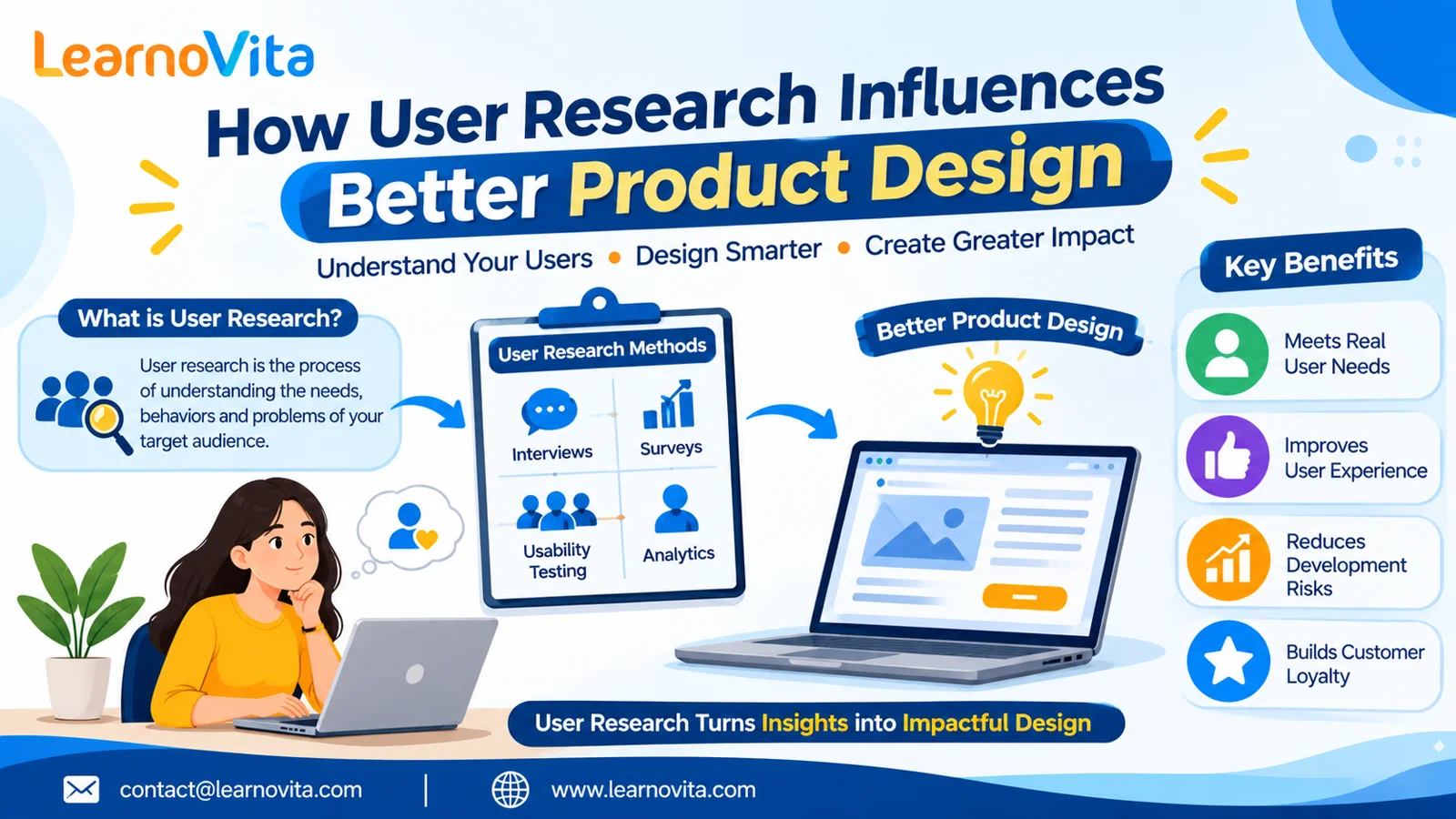
User research is an essential part of creating products that meet real user needs. It helps designers understand customer expectations, identify common challenges, and develop digital experiences that are easy to use. By gathering feedback and studying user behavior, businesses can make informed design decisions instead of relying on assumptions. Effective research supports better usability, improves customer satisfaction, and helps create products that deliver meaningful value.
Understanding User Expectations Before Designing
Successful product design begins with understanding the people who will use the product. User research helps designers discover customer goals, preferences, habits, and expectations. Interviews, surveys, and observation provide valuable information about how users interact with digital products. Professionals who pursue a UI UX Course in Bangalore can develop an understanding of research-driven design principles and learn how user insights influence interface decisions.
Identifying Problems That Affect User Experience
Research enables designers to identify difficulties users may encounter while navigating an application or website. Complicated menus, unclear instructions, unnecessary steps, and confusing layouts can reduce user satisfaction. Observing real users helps teams recognize these problems before they become major issues. Addressing usability challenges early makes products more intuitive and reduces the need for expensive redesigns after launch.
Selecting Suitable Methods for User Research
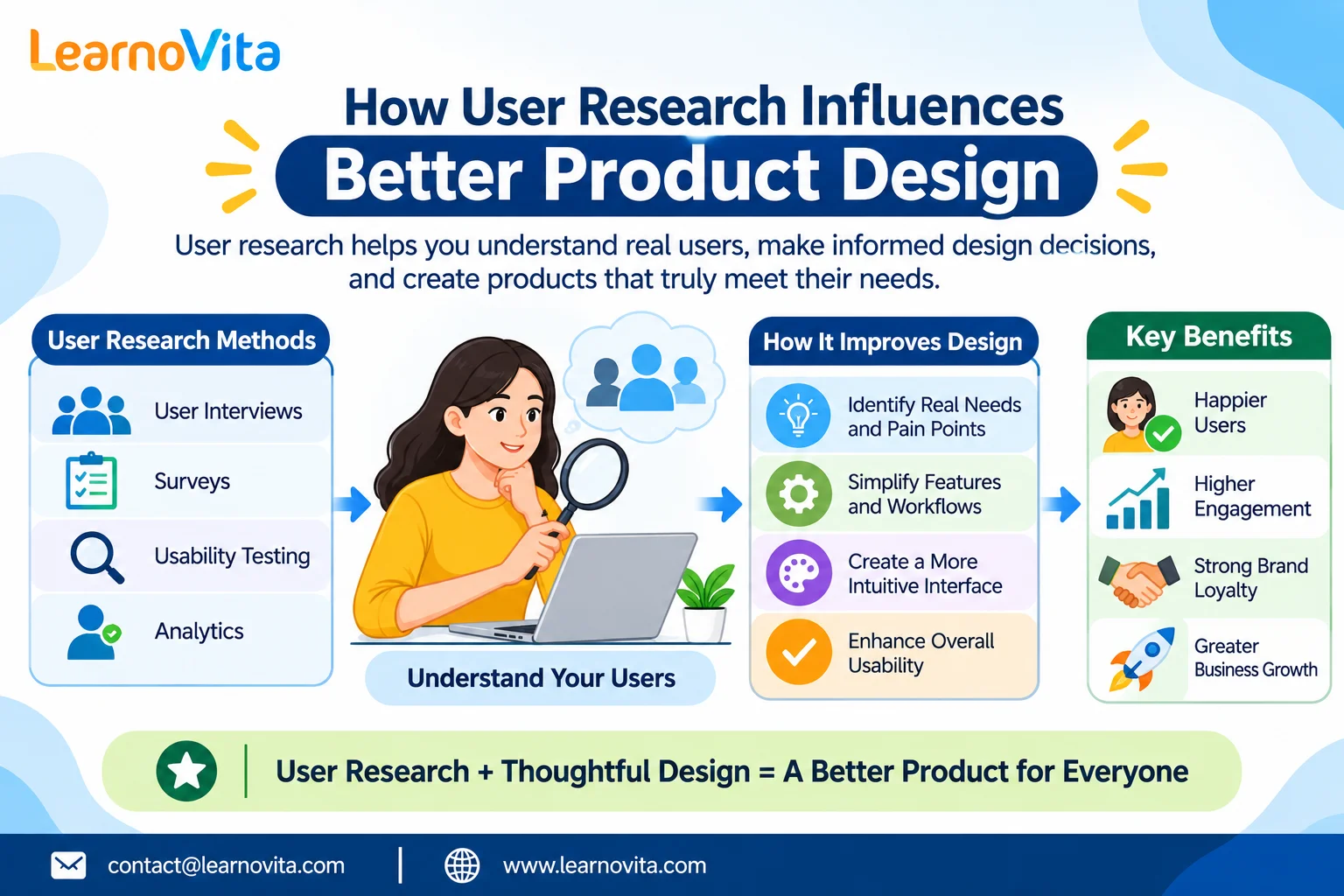
Different research methods help designers collect different types of information. Surveys can reveal general preferences, while interviews provide deeper insights into user motivations. Usability testing shows how people interact with a design, and competitor analysis helps identify opportunities for improvement. Learning these approaches through UI UX Design Training in Chennai can help aspiring designers understand how to collect relevant information and apply it during the design process.
Creating User Personas and Journey Maps
User personas represent important user groups based on research findings, including their goals, needs, and challenges. Journey maps illustrate the steps users take when interacting with a product, from their first visit to completing a specific task. These tools help design teams understand the overall customer experience and identify areas that require improvement. Research-based personas and journey maps also encourage teams to focus on user needs throughout product development.
Improving Accessibility and Interface Usability
User research helps designers create interfaces that work effectively for people with different abilities, preferences, and levels of technical experience. Feedback from diverse users can reveal accessibility barriers, difficult navigation patterns, and readability issues. Designers can use these findings to improve color contrast, typography, navigation, and interactive elements. Professionals exploring a UI UX Course in Hyderabad can build relevant knowledge of user-centered design and understand how accessibility contributes to a more inclusive digital experience.
Validating Designs Through Prototype Testing
Before developing a complete product, designers can create prototypes to evaluate their ideas. Testing these prototypes with potential users helps reveal whether the layout, navigation, and features are easy to understand. User feedback allows designers to make improvements before significant development resources are invested. Repeated testing also helps teams compare design alternatives and select solutions that better support user goals.
Applying User Feedback for Continuous Improvement
User research remains valuable even after a product is launched. Customer feedback, usability observations, analytics, and support requests can highlight new problems and changing expectations. Design teams can use this information to improve existing features, simplify workflows, and introduce enhancements that benefit users. Structured learning through a UI UX Design Certification Online Training Course can help learners understand the importance of research, usability evaluation, and continuous design improvement.
Conclusion:
User research helps transform product design from assumption-based decision-making into a process guided by real user needs. By identifying problems, understanding behavior, testing prototypes, and collecting feedback, designers can create more useful and accessible digital experiences. Making research a regular part of product development helps businesses improve usability, strengthen customer satisfaction, and build products that remain relevant as user expectations evolve.
Comments