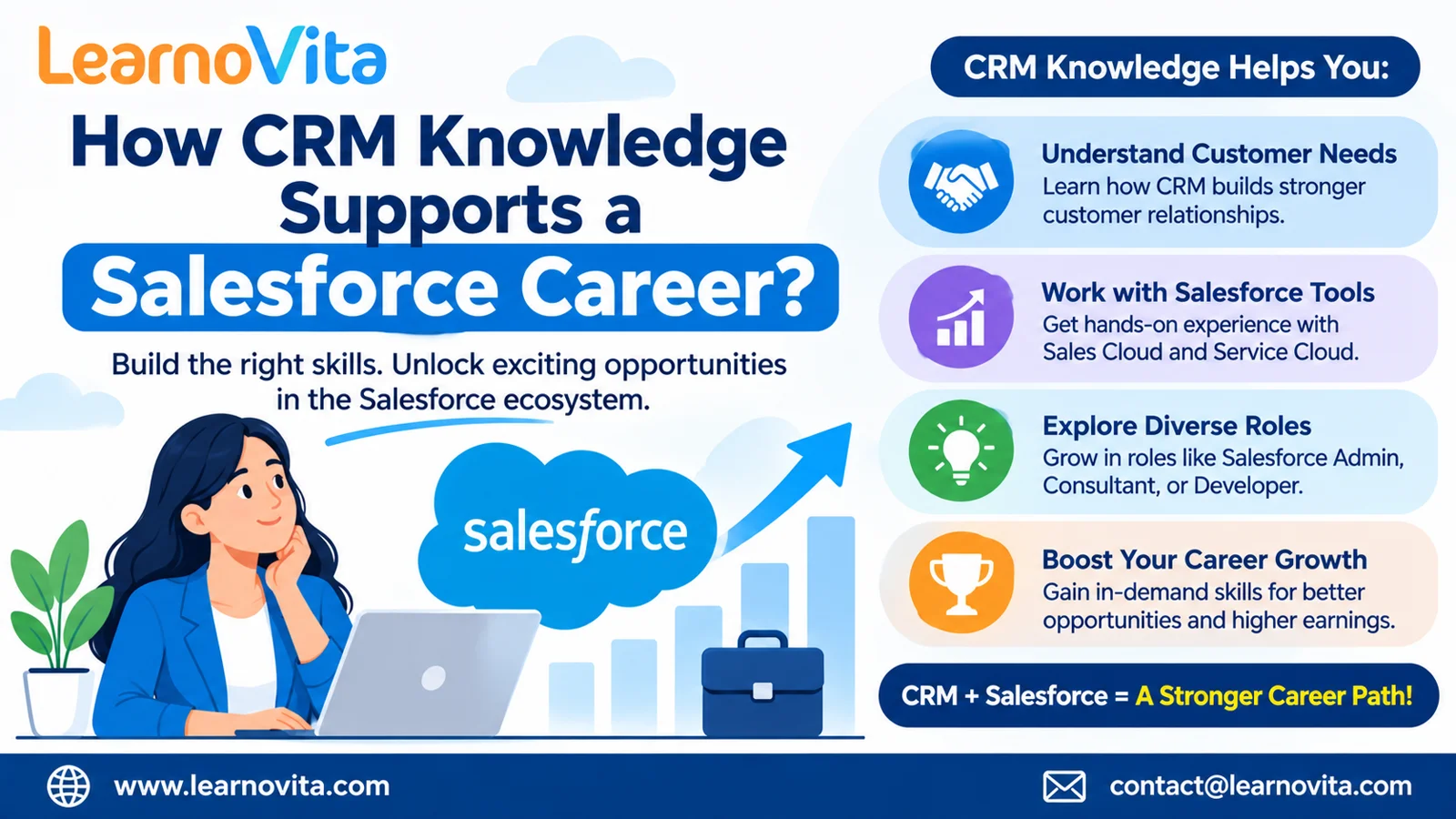
Customer Relationship Management (CRM) enables businesses to organize customer data, improve communication, and build stronger relationships with their audiences. Salesforce provides powerful tools for managing sales, customer support, marketing activities, and business processes. For aspiring Salesforce professionals, CRM knowledge helps connect platform features with practical business objectives. Joining Salesforce Training in Bangalore can help learners understand CRM principles and develop the foundational skills needed to work with Salesforce solutions.
Understanding CRM and Its Business Applications
CRM brings together the strategies, processes, and technologies organizations use to manage customer interactions. It supports activities such as tracking potential customers, managing sales opportunities, maintaining customer records, and resolving service requests. Salesforce helps businesses centralize customer information and coordinate work across different departments. Professionals who understand CRM concepts can identify business requirements more clearly and recognize how Salesforce contributes to customer satisfaction and operational improvement.
Connecting Business Processes with Salesforce Features
CRM knowledge helps Salesforce professionals configure applications based on actual business needs. Understanding lead qualification, opportunity tracking, customer lifecycle management, and service processes makes it easier to design effective workflows. For example, knowledge of a company's sales cycle helps determine how customer prospects should move through different stages. This understanding also supports appropriate configuration of fields, records, automation, and reports so that Salesforce functionality aligns with organizational objectives.
Managing Customer Data and Information Accuracy
Maintaining reliable customer information is a fundamental part of CRM management. Salesforce professionals work with leads, accounts, contacts, and opportunities to organize information and support business activities. Accurate records help prevent duplication, improve communication, and provide teams with a clearer understanding of customer interactions. Knowledge of data validation, access permissions, and record maintenance is equally important. These capabilities can help individuals prepare for responsibilities in Salesforce administration and implementation.
Enhancing Sales and Customer Service Workflows
CRM systems help businesses manage customer relationships throughout the sales and service journey. Sales teams use Salesforce to track leads, update opportunities, record conversations, and monitor progress toward targets. Customer service teams use it to manage cases, follow up on requests, and review previous interactions. Understanding these workflows allows Salesforce professionals to configure features that support team productivity and customer satisfaction. Exploring Salesforce Training in Chennai can help learners develop practical knowledge of CRM operations and Salesforce functionality.
Applying CRM Knowledge to Automation and Reporting
Organizations use CRM technology to streamline routine tasks and measure business performance. Salesforce professionals can configure Flow to automate repetitive activities, support business rules, and maintain consistent workflows. Reports and dashboards help teams review sales results, service performance, and customer-related trends. Understanding the purpose of each process helps professionals identify suitable automation opportunities and select meaningful performance indicators. These skills allow Salesforce specialists to support efficient operations and better-informed business decisions.
Career Opportunities for Salesforce Professionals
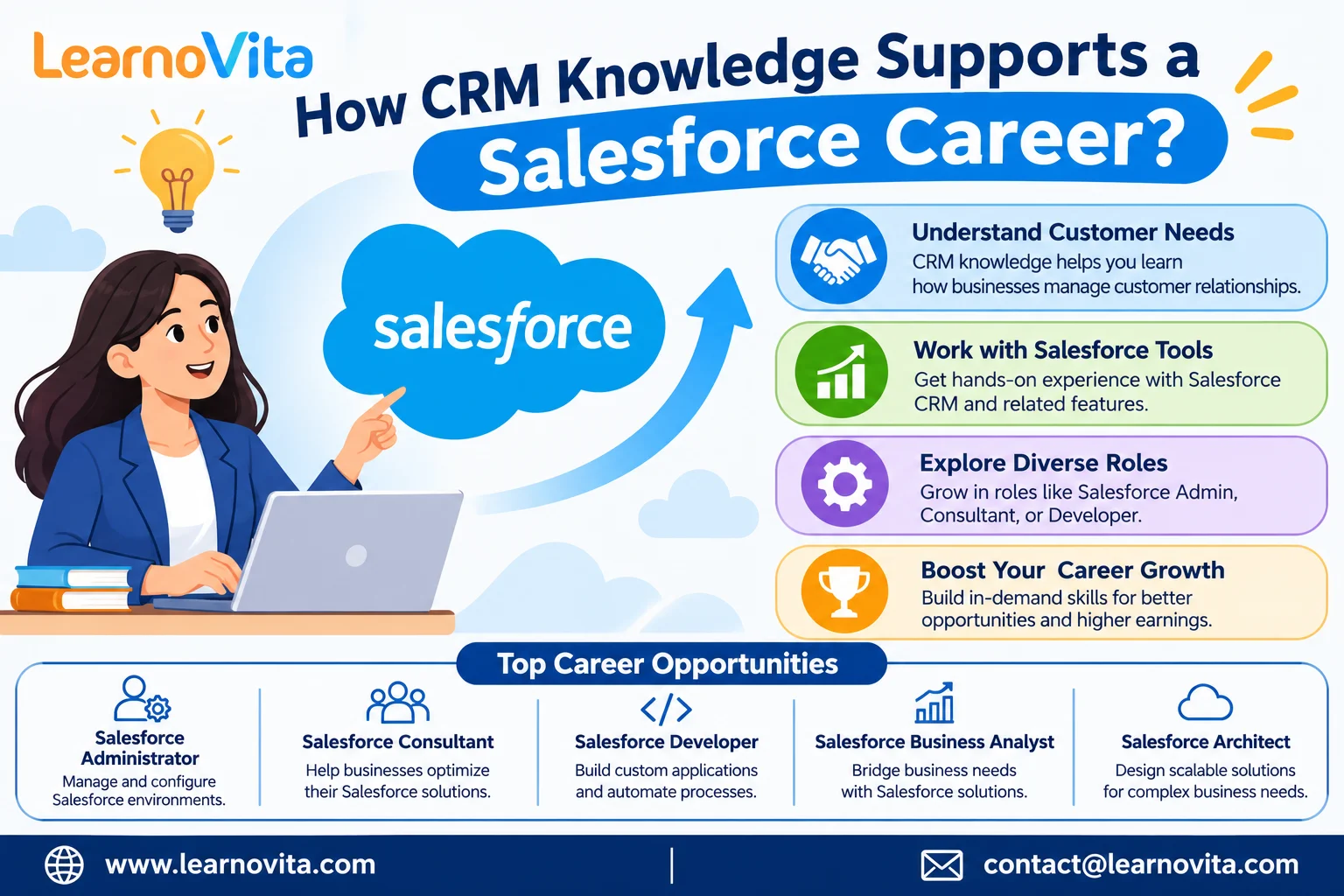
CRM knowledge can open pathways to several roles within the Salesforce ecosystem. Salesforce Administrators manage user access, configure platform settings, maintain reports, and support automation. Developers create custom functionality and integrations, while Business Analysts gather requirements and document workflows. Consultants help organizations implement solutions that match their operational needs. A strong understanding of customer management helps professionals communicate with stakeholders and contribute to projects more effectively. Learners can explore Salesforce Training in Hyderabad to build relevant platform knowledge and prepare for different career opportunities.
Developing Practical Salesforce Expertise
Building a successful Salesforce career requires a combination of CRM understanding, technical skills, and hands-on experience. Practical exercises can help learners manage customer records, configure workflows, create reports, and automate business processes. Analytical thinking, communication, and problem-solving are also valuable when working with business teams. Applying these skills to realistic scenarios helps professionals understand how Salesforce supports organizational goals. Continuous learning and practical project experience can further prepare individuals for more advanced responsibilities.
Conclusion:
CRM knowledge helps Salesforce professionals understand how customer relationships, business workflows, and technology work together. Familiarity with customer data, sales management, service processes, automation, and reporting supports the development of effective Salesforce solutions. By combining CRM fundamentals with practical platform experience and ongoing learning, individuals can prepare for careers in administration, development, consulting, and business analysis while building opportunities for long-term professional growth.
Comments